
Eastern AHEC | Employer Collaboratives
The Eastern AHEC Healthcare Workforce Collaboratives bring healthcare employers, educators, workforce organizations, and community partners together to address the healthcare workforce needs of Eastern North Carolina. Formed through the NC Health Talent Alliance initiative, the collaboratives translate statewide workforce challenges into practical regional strategies across Eastern AHEC’s 23-county service area.
Using regional workforce data and local partners’ expertise, the collaboratives advance solutions for recruitment, education and training, retention, workforce well-being, and career advancement. The work is organized through Northeastern and Southeastern regional partnerships, so strategies reflect each community’s needs, assets, and opportunities.
Building the Healthcare Workforce of Tomorrow – Together
Eastern AHEC serves as a regional convener at the intersection of healthcare, education, and workforce development. Through collaborative partnerships, participants share information, identify common priorities, align resources, and design solutions that strengthen healthcare career pathways from early exposure through employment and advancement.
Why Partner with Eastern AHEC?
Healthcare workforce challenges are too complex for any one organization to solve alone. Eastern AHEC creates a structure for partners to move from shared concerns to coordinated regional action.
- Identify workforce shortages, barriers, and critical skills gaps.
- Align education and training programs with employer needs.
- Develop internships, apprenticeships, and other work-based learning pathways.
- Strengthen recruitment, retention, advancement, and workforce well-being strategies.
- Use shared measures to track progress and improve regional approaches.
- Elevate regional priorities that may require policy, funding, or system-level solutions.
Our Strategic Priorities
Talent Pipeline Development: Create clear pathways from career awareness and education to work-based learning, employment, and advancement.
Workforce Advancement: Support the retention, well-being, skill development, and career mobility of the current healthcare workforce.
Regional Collaboration: Build durable partnerships among healthcare employers, K-12 schools, colleges and universities, workforce organizations, and community partners.
Innovation and Impact: Test practical solutions, share effective models, and measure whether regional efforts improve workforce and learner outcomes.
How the Collaboratives Work
Regional employers help define priorities and guide action. Education, workforce, and community partners contribute the expertise and resources needed to co-develop solutions. Work moves forward through regional meetings, focused action groups, implementation labs, employer-led pilots, and shared measurement.
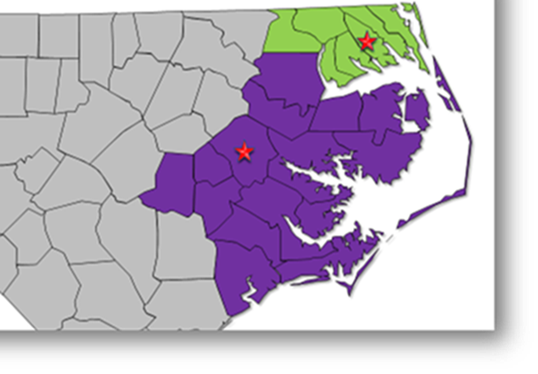
Southeastern Region- Pitt, Greene, Lenoir, Wayne, Washington, Beaufort, Carteret, Craven, Onslow, Jones, Martin, and Pamlico Counties
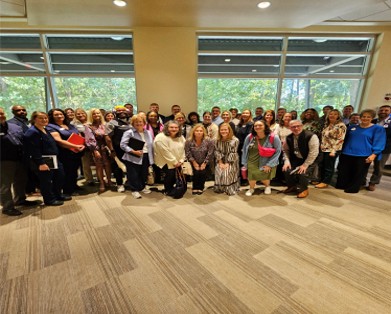
The Southeastern Regional Healthcare Workforce Collaborative is moving from relationship-building into active implementation. Employers, education partners, workforce leaders, and community stakeholders are working together to expand student pipelines, apprenticeships, and county-level healthcare workforce partnerships.
Current Areas of Focus
- Expand high school healthcare internships and other work-based learning opportunities.
- Develop and scale registered apprenticeships in priority roles, including Nurse Aide I and surgical technology.
- Strengthen pathways that connect entry-level credentials to nursing and other advanced healthcare careers.
- Support county-level partnerships that align schools, colleges, employers, and workforce organizations.
- Build regional measures for apprenticeship growth, student success, workforce impact, and employer engagement.
Southeastern Regional Work in Action
One area Healthcare Employer Champion, one Community College Partner, and one K-12 School system have developed a connected pipeline that includes high school internships, an accelerated CNA apprenticeship, a surgical technologist apprenticeship, and a CNA-to-ADN pre-apprenticeship pathway. As of May 2026, the model reported more than 100 projected student interns for summer 2026, 14 accelerated CNA completers, 12 students retained as employees, and full employment retention among surgical technologist apprenticeship completers.
Eastern AHEC is using lessons from this and other employer-led models to help regional partners develop or expand student pipeline initiatives through the Career Champion Lab and related implementation support.
Regional direction: Build practical, employer-led pathways that can be adapted across communities while preserving the flexibility needed to meet local needs.
Northeastern Region- Bertie, Camden, Chowan, Currituck, Dare, Gates, Hertford, Hyde, Pasquotank, Perquimans, Tyrrell, Washington counties
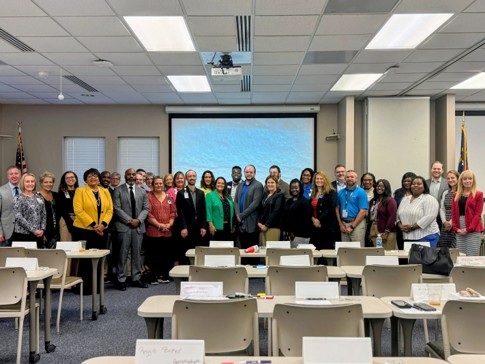
The Northeastern Healthcare Workforce Collaborative brings healthcare employers, education partners, workforce organizations, and community leaders together to address the region’s most persistent healthcare workforce challenges through shared priorities, coordinated action, and measurable progress.
Since launching, the Collaborative has moved beyond identifying workforce shortages to building a regional infrastructure for problem-solving. Partners are using employer and workforce data, shared experience, and cross-sector expertise to identify where the healthcare talent pipeline is breaking down and where coordinated regional solutions can have the greatest impact.
The work recognizes that strengthening the healthcare workforce requires more than recruiting individuals into training programs or filling open positions. Sustainable workforce growth depends on creating clear career pathways, expanding access to education and training, improving retention, strengthening employer-educator alignment, and addressing practical barriers that prevent people from entering and remaining in healthcare careers.
Current Areas of Focus
- Build a stronger future workforce pipeline by increasing healthcare career awareness and creating seamless pathways from K–12 through education, training, and employment.
- Align talent supply with workforce demand by strengthening nursing and allied health pathways and accelerating the transition from training to practice.
- Improve recruitment, retention, and workforce stability through collaborative solutions that address burnout, career advancement, workplace flexibility, and employee engagement.
- Reduce barriers that limit workforce participation by advancing regional strategies that support learners and employees with challenges such as childcare, transportation, housing, and other social determinants.
- Drive measurable regional impact through shared data, accountability, and coordinated action to address critical shortages of nurses, physicians, advanced practice providers, and other high-demand healthcare professionals.
Northeastern Regional Work in Action
Since its launch, the Northeastern NC Healthcare Workforce Collaborative has established a regional forum where healthcare employers, educational institutions, workforce partners, economic development organizations, and community stakeholders work together to move from workforce challenges to coordinated action. Through shared data review, facilitated planning, focused action groups, and partner-led initiatives, the region is increasingly aligning efforts across the healthcare talent pipeline to achieve measurable workforce outcomes. The Collaborative currently engages 26 organizations across 12 counties, creating a structure for sustained regional problem-solving and implementation.
This collective work, supported by the leadership and expertise of partner organizations, has advanced several regional priorities. Accomplishments include expanding healthcare career exposure opportunities for students through apprenticeships and a regional healthcare program for K-12, strengthening employer-education partnerships, improving coordination of clinical and training pathways, addressing capacity challenges, exploring innovative workforce supports such as the NC Tri-Share childcare model, pursuing grant funding to support regional workforce initiatives, and developing shared approaches to better track and strengthen healthcare workforce pipeline outcomes. Partners are now building on these successes by establishing measurable indicators to track regional progress and impact over time in recruitment and retention, workforce sustainability, education and training pathways, and workforce support systems.
Regional direction: Build a stronger and more sustainable healthcare workforce by connecting talent pipeline strategies, employer demand, education and training capacity, and the practical supports people need to enter, remain in, and advance within healthcare careers.
Join a Collaborative |
|
|---|---|
 |
Eastern AHEC welcomes healthcare systems, hospitals, long-term care providers, behavioral health organizations, community health centers, home health agencies, education partners, workforce organizations, and other stakeholders committed to strengthening the healthcare workforce in Eastern North Carolina. |
Benefits of Participation
- Help shape regional healthcare workforce priorities.
- Inform education, training, and work-based learning strategies.
- Learn from employer-led models and regional partners.
- Connect with organizations working on shared workforce challenges.
- Contribute to regional data, measurement, funding, and policy discussions.
- Participate in focused action groups and implementation opportunities.
Southeastern Region |
Northeastern Region |
|---|---|
| Kathy Russell, M.Ed. Regional Healthcare Workforce Manager Eastern Area Health Education Center russellkath25@ecu.edu 252-646-3559  |
Bryan L. Spence, MBA Regional Healthcare Workforce Manager Eastern Area Health Education Center spenceb24@ecu.edu 757-650-5481  |
Suggested Call to Action
Ready to get involved? Contact the Regional Healthcare Workforce Manager serving your area to learn about upcoming meetings, action groups, and partnership opportunities or to share opportunities, programs, or initiatives at your establishment.